Things to Do in Sunderland: The Complete Guide
From Roker Pier and the Seaburn sands to the Empire, Culture House, Penshaw Monument and St Peter's Church, a practical guide to things to do in Sunderland.
Sunderland packs a lot into a compact city: two long beaches, a city-centre culture quarter that has changed a great deal in the last five years, a 49,000-seat stadium on the banks of the Wear, and some of the oldest Christian heritage in England. This guide walks through the main things to do, area by area, with notes on what is open now and what is worth checking before you set off.
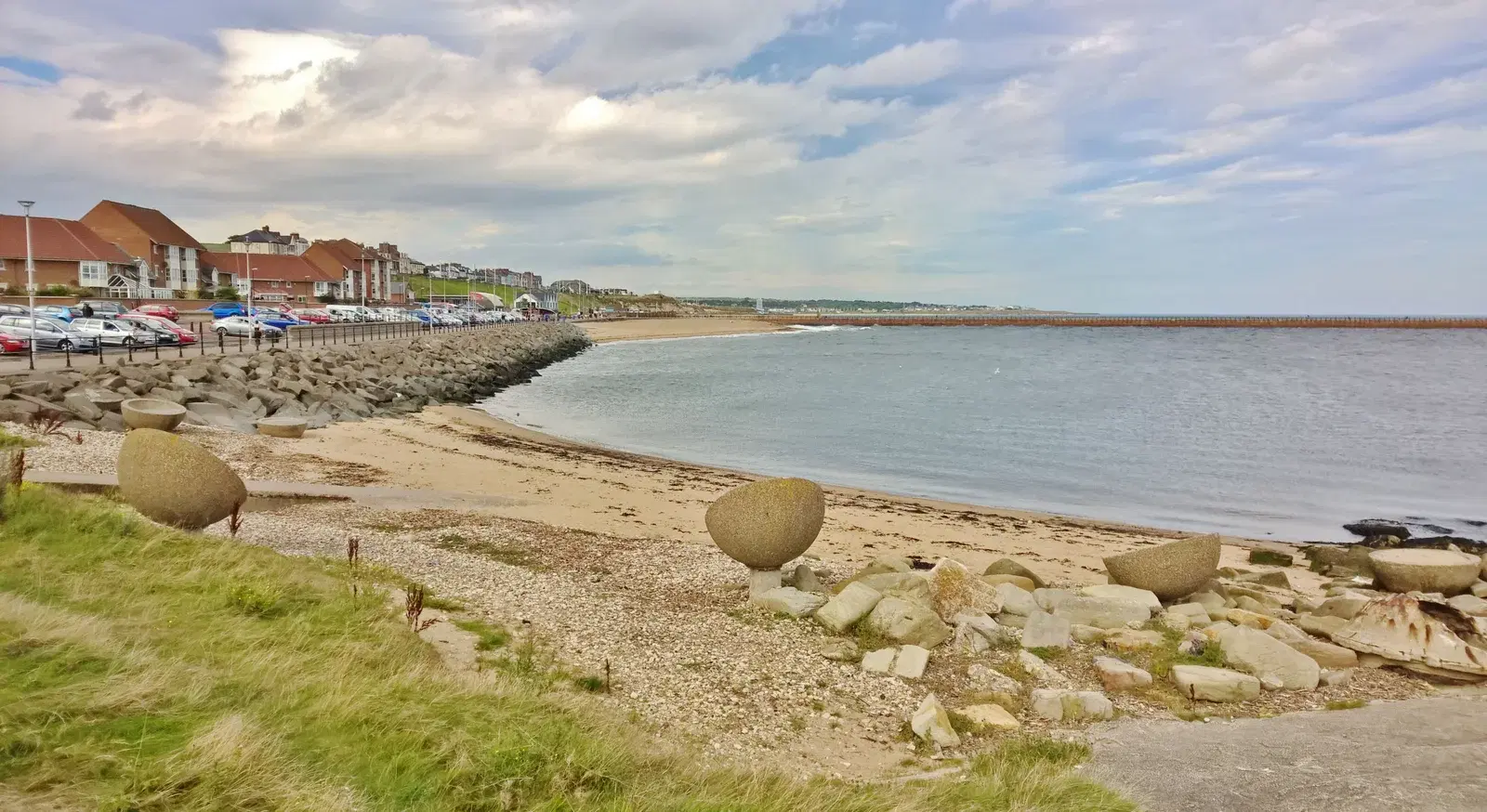
The seafront at Roker and Seaburn
The coast is the easiest place to start. Roker Pier stretches out into the North Sea from the mouth of the Wear, with its striped granite lighthouse at the end, completed in 1903. The pier promenade is open to walkers in fair weather, and the volunteer group that cares for the structure opens the tunnel and lighthouse for occasional events such as Heritage Open Days; regular public tours are not running at present, so check the Roker Pier and Lighthouse website for group bookings.
North of the pier, Roker beach curves round to the Cat and Dog Steps and on to Seaburn, giving well over a mile of sand with cafes, parking and promenade the whole way. Just inland, Roker Park is a Victorian park with a boating lake, a ravine walk down towards the sea and a bandstand. For something more active, Adventure Sunderland runs kayaking, paddleboarding, coasteering and powerboat sessions from its centre on Marine Walk, a few minutes from the pier.
Best for: Best for families, dog walkers and anyone who wants sea air without leaving the city.
The city-centre culture quarter
High Street West and Keel Square now form a walkable cluster of venues. The Sunderland Empire opened in 1907 and is one of the largest theatres in the region, staging touring musicals, drama, comedy and the winter pantomime. Directly opposite, The Fire Station has turned the former Central Fire Station into a bar and restaurant with a new auditorium behind it for gigs, folk, comedy and dance.
At the top of the street, Culture House opened on Keel Square in September 2026. It is home to the City Library, exhibitions and the University of Sunderland's Northern Gallery for Contemporary Art, and it is open every day. Further down High Street West in Sunniside, Pop Recs is an independent music venue and cafe with a busy gig calendar, and the Omniplex cinema on Lambton Street has 12 screens including a large-format MAXX screen.
Sunderland Museum and Winter Gardens on Burdon Road closed at the end of August 2026 for a £13.6m redevelopment, with reopening reported for late 2028; in the meantime its collections appear at pop-up events around the city. The National Glass Centre at St Peter's closed permanently in July 2026, so the museum is now the place to follow for the city's glass heritage. Away from the centre, the volunteer-run Royalty Theatre off Chester Road puts on a full season of community drama, and Arts Centre Washington in Fatfield runs performances, exhibitions and classes.
Best for: Best for an evening out: a show, a gig or a film, with plenty of places to eat within a few streets.
Stadium of Light
Sunderland AFC's home since 1997 stands on the north bank of the Wear in Monkwearmouth, on the site of the former Wearmouth Colliery. On match days the walk over Wearmouth Bridge or along the river from the city centre is part of the experience, and the Metro stops at both St Peter's and Stadium of Light stations. The club runs behind-the-scenes stadium tours on selected non-match days through the year. Dates are released month by month on the club's website and tend to sell out in school holidays.
Best for: Best for football fans and visiting supporters with time before or after a game.
Heritage
Sunderland's history runs deep. St Peter's Church in Monkwearmouth was founded in 674 AD by Benedict Biscop, and its west wall and tower porch are among the oldest standing church fabric in England. The Venerable Bede began his monastic life here before moving to the sister house at Jarrow. The church is still in use, and the Bede connection is marked in and around the building.
On the north side of the city, Hylton Castle is a medieval gatehouse tower that has been restored and reopened as a community heritage centre by the Hylton Castle Trust, with guided tours on selected days. To the west, Penshaw Monument, built in 1844 in memory of the first Earl of Durham and modelled on a Greek temple, sits on a hill visible for miles and has been cared for by the National Trust since 1939. Nearby in Washington village, Washington Old Hall, also National Trust, is the ancestral home of George Washington's family, with a restored manor house and gardens.
Best for: Best for history lovers and anyone who wants a half-day trip with a walk attached.
Green space
Mowbray Park, beside the museum in the city centre, is a Victorian park with a lake, terraces and views over the city. On the south-west edge of the city, Herrington Country Park was created on the site of a former colliery and has a large lake, open grassland and a direct view up to Penshaw Monument. In Washington, the WWT Washington Wetland Centre covers more than 100 acres on the banks of the Wear, with hides, woodland walks and a flock of flamingos.
Best for: Best for young children, birdwatchers and an afternoon outdoors.
Annual events
The council's Sunderland Illuminations have traditionally lit up the Roker and Seaburn seafront through October and into November, often alongside a ticketed Festival of Light in one of the city's parks. Dates and the park used change from year to year, so check the council's events pages each autumn.
The Sunderland International Airshow, which drew large crowds to Roker and Seaburn for three decades, was last held in 2019, and in 2022 the council announced that it would not be staged again. Visitors may still see older references to it, but there is currently no airshow on the seafront.
Best for: Best for planning ahead: autumn is the time to visit the seafront after dark.
Know a place we have missed? Get in touch.
Local businesses mentioned
Sunderland Empire
4-5 High Street West, Sunderland, SR1 3EX
The Fire Station
High Street West, Sunderland, SR1 3HA
Culture House
Keel Square, High Street West, Sunderland, SR1 3DZ
Sunderland Museum and Winter Gardens
Burdon Road, Sunderland, SR1 1PP
Adventure Sunderland
Marine Walk, Roker, Sunderland, SR6 0PL
Pop Recs
172-175 High Street West, Sunniside, Sunderland, SR1 1UP
Omniplex Cinema Sunderland
4 Lambton Street, Sunderland, SR1 1TP
Royalty Theatre
25 The Royalty, Sunderland, SR2 7PP
Arts Centre Washington
Biddick Lane, Fatfield, Washington, NE38 8AB
Never miss what’s on
Join the weekly SunderlandCity.live digest — the best events, news and local tips, straight to your inbox. One email a week.
What's On
Witches, Fairies and Satan: Folk Tales of County Durham
1:00 PM · Arts Centre Washington, Biddick Lane, Fatfield, Washington, NE38 8AB
Frozen Assets
7:30 PM · Arts Centre Washington, Biddick Lane, Fatfield, Washington, NE38 8AB
Spotlight: Washington Open Exhibition 2026
See website · Arts Centre Washington, Biddick Lane, Fatfield, Washington, NE38 8AB