The Tyne-Wear Derby Explained
A guide to the Tyne-Wear derby between Sunderland and Newcastle United: where the rivalry comes from, the matches people still talk about and how to follow it today.
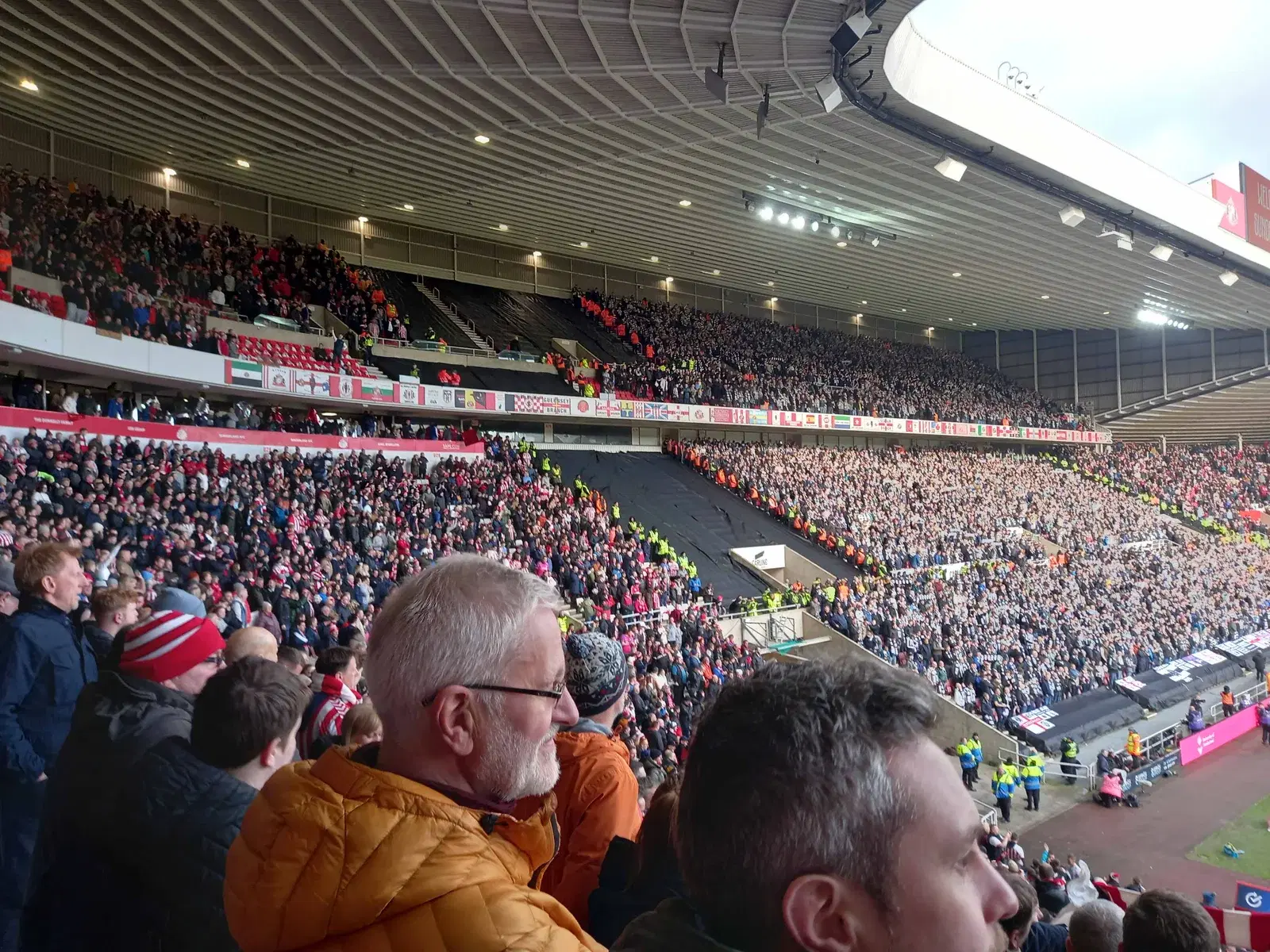
The Tyne-Wear derby is the name given to matches between Sunderland AFC and Newcastle United. The two grounds, the Stadium of Light and St James' Park, are only about ten miles apart, and the fixture has been played for well over a century. This guide explains where the rivalry comes from, picks out some of the matches that are still talked about on both sides of the boundary, and sets out how to follow a derby today. It is written for newcomers and visitors as much as for supporters, and it tries to stay neutral.
Two rivers, two cities
The rivalry between Sunderland and Newcastle is older than football. Both towns grew on coal, shipping and trade, and for centuries they competed for the same business. Accounts of the rivalry often point to the English Civil War, when Sunderland sided with Parliament and Newcastle with the King, and to the Jacobite risings of the 18th century as moments when the two towns found themselves on opposite sides. How much of that history feeds into a modern football crowd is open to debate, but it is part of the story both sets of fans tell.
The labels go with it. People from Tyneside are Geordies; people from Wearside are often called Mackems, a word with its own history that we cover in what is a Mackem.
The first meetings
The two clubs first met in 1883. The first competitive meeting came in the FA Cup in 1888, when Sunderland beat Newcastle East End, one of the clubs that later became Newcastle United, 2-0.
Interest was intense from the start. On Good Friday 1901 a derby at St James' Park had to be abandoned before it began when, by contemporary accounts, around 120,000 people tried to get into a ground that held about 30,000.
Matches still talked about
Every supporter has their own list, but some results come up again and again.
- 5 December 1908. Sunderland won 9-1 at St James' Park, the largest winning margin in the history of the fixture. Newcastle's largest wins in the derby are 6-1, in 1920 and 1955.
- 1979. Sunderland won 4-1 with a hat-trick from Gary Rowell.
- 1 January 1985. Peter Beardsley scored a hat-trick for Newcastle on New Year's Day.
- 1990 play-off semi-final. After a 0-0 first leg at Roker Park, Sunderland won the second leg 2-0 at St James' Park.
- 25 August 1999. Newcastle's manager Ruud Gullit left Alan Shearer out of his side; Kevin Phillips and Niall Quinn scored as Sunderland won 2-1 at St James' Park.
- 17 April 2006. Newcastle won 4-1.
- 25 October 2008. Sunderland won 2-1 at the Stadium of Light, their first home derby win in 28 years.
- 31 October 2010. Newcastle won 5-1.
- 14 April 2013. Sunderland, managed by Paolo Di Canio, won 3-0, the start of a run of six straight derby wins between 2013 and 2015, a record for the fixture.
- 6 January 2024. Newcastle won 3-0 at the Stadium of Light in the FA Cup third round.
The derby has also become a fixture in the women's game. On 13 October 2024 a women's Tyne-Wear derby drew a crowd of 15,387. After Sunderland's promotion in 2025, the men's league derby returned in the 2025-26 season.
Best for: Derby tickets sell quickly and sale rules can differ from other home matches. Check the club's ticketing pages well in advance rather than relying on match-day sales.
People who crossed the divide
A handful of people have a place in both clubs' histories. Bob Stokoe won the FA Cup as a Newcastle player in 1955 and then managed Sunderland to their 1973 FA Cup win; supporters of both clubs attended his funeral. Managers Sam Allardyce and Steve Bruce have each been in charge at both grounds. Players have moved between the clubs too.
The culture of the fixture
On derby day the build-up starts days ahead, and the result is talked about in workplaces across the region for weeks afterwards. For most supporters the rivalry is about pride and humour, and plenty of families and friendship groups contain fans of both clubs.
There has also been trouble at times over the years, and derby days usually bring a larger police and stewarding presence than an ordinary match. Kick-off times are sometimes moved, and travel arrangements for away supporters can be more tightly managed. Following stewards' and police instructions is part of attending.
How to follow it today
At the ground. Home derbies are played at the Stadium of Light. Our Stadium of Light match day guide covers the Metro, Park and Ride, accessibility and timings, which can differ on derby day. Kick-off times can be moved for television or policing, so confirm the date and time on the club's site rather than relying on the original fixture list. For the club's current division and fixtures, check the club's site for the current season.
In a pub. Many supporters watch away derbies on screens in the city. The Colliery Tavern opposite the stadium and Harbour View at Roker both show live sport; check with the pub on derby day, as some operate admission or capacity rules for high-profile matches.
In the archive. The Fans Museum in the former Monkwearmouth station on North Bridge Street holds programmes and memorabilia from past derbies. Opening days vary, so contact the museum before visiting. Admission costs nothing and donations are welcome.
See it today
Outside match days, the best places to explore the rivalry are the Fans Museum and the Stadium of Light itself, where the Bob Stokoe statue honours a man who belongs to both clubs' stories. Our history of Sunderland AFC and history of Roker Park cover the grounds where many of these matches were played, and football in Sunderland covers the women's team and the wider local game.
Have a derby memory or a match we should add? Get in touch.
Local businesses mentioned
Sunderland AFC (Stadium of Light)
Stadium of Light, Millennium Way, Monkwearmouth, Sunderland, SR5 1SU
The Fans Museum
Monkwearmouth Station, North Bridge Street, Sunderland, SR5 1AP
Colliery Tavern
12 Southwick Road, Monkwearmouth, Sunderland, SR5 1EQ
Harbour View
Benedict Road, Roker, Sunderland, SR6 0NU
Never miss what’s on
Join the weekly SunderlandCity.live digest — the best events, news and local tips, straight to your inbox. One email a week.
What's On
Witches, Fairies and Satan: Folk Tales of County Durham
1:00 PM · Arts Centre Washington, Biddick Lane, Fatfield, Washington, NE38 8AB
Frozen Assets
7:30 PM · Arts Centre Washington, Biddick Lane, Fatfield, Washington, NE38 8AB
Spotlight: Washington Open Exhibition 2026
See website · Arts Centre Washington, Biddick Lane, Fatfield, Washington, NE38 8AB