Historic Trades of Sunderland: Ships, Coal, Glass, Pottery and Rope
The industries that built Sunderland, from salt pans and keelmen to shipyards, glassworks, lustreware potteries, the patent ropery, Vaux brewery and the last pit, with places to see their traces.
For most of its history Sunderland earned its living from the river. Salt, coal, ships, glass, pottery and rope all came out of workshops and yards along the Wear, and each trade left something behind: a street name, a building, a monument or a collection of objects. This guide walks through the main industries in roughly the order they grew, and points to the places where you can still see their traces. For the full timeline, read our history of Sunderland.
Fishing and salt
The early settlement at the river mouth lived mainly from fishing, with herring in the 13th century and salmon in the 14th and 15th. Salt came next. By 1589 salt pans had been laid out on the river bank at what is now Pann's Bank, between the city centre and the East End. Large vats of seawater were heated over coal fires until only the salt was left. The poorer coal went under the pans, and the better coal began to be shipped out.
Coal and the keelmen
Coal soon overtook salt. Around 2,000 to 3,000 tons left Sunderland in 1600, and by 1680 the figure had risen to about 180,000 tons. The Wear was too shallow for the big sea-going colliers to reach the pits upriver, so coal was loaded onto keels, flat-bottomed boats crewed by keelmen, and carried down to the waiting ships. By 1788 Sunderland was Britain's fourth largest port by tonnage, after London, Newcastle and Liverpool.
Deep mining came later. Monkwearmouth Colliery on the north bank opened in 1835 and was the last working pit in the Durham coalfield when its final shift left on 10 December 1993. The Stadium of Light now stands on the site, with a Davy lamp monument at the entrance. Keel Square in the city centre and Keel Tavern beside it take their names from the boats.
Best for: The Davy lamp monument suits a short stop on the riverside walk between the city centre and the stadium.
Shipbuilding
Ships were built on the Wear from at least 1346. By the early 18th century small yards lined the river as far as the tide reached, and by the middle of that century Sunderland was probably Britain's leading shipbuilding centre. In 1815 the town built 600 ships across 31 yards, and by 1840 it had 76 yards. In 1850 the local press called it the greatest shipbuilding port in the world, and between 1846 and 1854 almost a third of the UK's ships were launched here.
Sunderland built both sail and steam. The clipper City of Adelaide was launched here in 1864, and the Torrens followed in 1875. In the 20th century, Austin & Pickersgill, formed in 1954, became known for the SD14 cargo ship, a standard design built in large numbers. Shipbuilding ended in 1988, when the Southwick and Doxford Pallion yards closed.
Best for: The riverside path from the Wearmouth Bridge down to the harbour suits anyone who wants to see the old yard sites.
Glass
Glass has the longest history of any Sunderland trade. Benedict Biscop brought glassworkers from Gaul to St Peter's in the 7th century. Modern glassworks followed from the 1690s, using sand brought in as ballast by ships from the Baltic, local limestone and local coal.
James Hartley & Co, founded in 1836, became the largest glassworks in the country, and its rolled plate glass was used for much of the Crystal Palace in 1851. In the 1850s there were also 16 bottle works on the Wear. John Candlish opened his own bottleworks in 1855, and his statue stands in Mowbray Park. Commercial glassmaking ended in 2007 when the Pyrex works closed.
The National Glass Centre closed permanently on 31 July 2026. A new Glassworks maker space is planned for 2028, but it will be a working studio rather than a museum.
Pottery and lustreware
Sunderland's first commercial pottery, the Garrison Pottery, opened in 1750. In the 19th century there were 16 potteries in the town, seven of which are known to have made lustreware. The style is famous for its pink splash lustre, plaques with mottoes and verses, and jugs showing the Wearmouth Bridge. Many pieces came from Anthony Scott's pottery in Southwick.
Sunderland Museum and Winter Gardens holds the main public collection, but the museum closed in August 2026 for refurbishment and is due to reopen in 2028.
Rope
In 1797 Sunderland gained the world's first patent ropery, Grimshaw and Webster's, which used a steam-powered hemp-spinning machine devised by a local schoolmaster, Richard Fothergill. Before this, rope was made by walking the yarn along a long ropewalk. The ropery building still stands in Deptford.
Limestone and lime
Sunderland sits on a plateau of magnesian limestone. The stone was quarried and burned for lime along the river, and Mowbray Park itself was laid out on a former quarry on Building Hill. Penshaw Hill was quarried for limestone in the 18th century, and the old quarry at Dawson's Plantation, on the wooded slopes below Penshaw Monument, is now a Site of Special Scientific Interest. See our Penshaw Monument and Herrington Country Park guide.
Best for: Penshaw suits a short climb with wide views over the former coalfield.
Water and steam
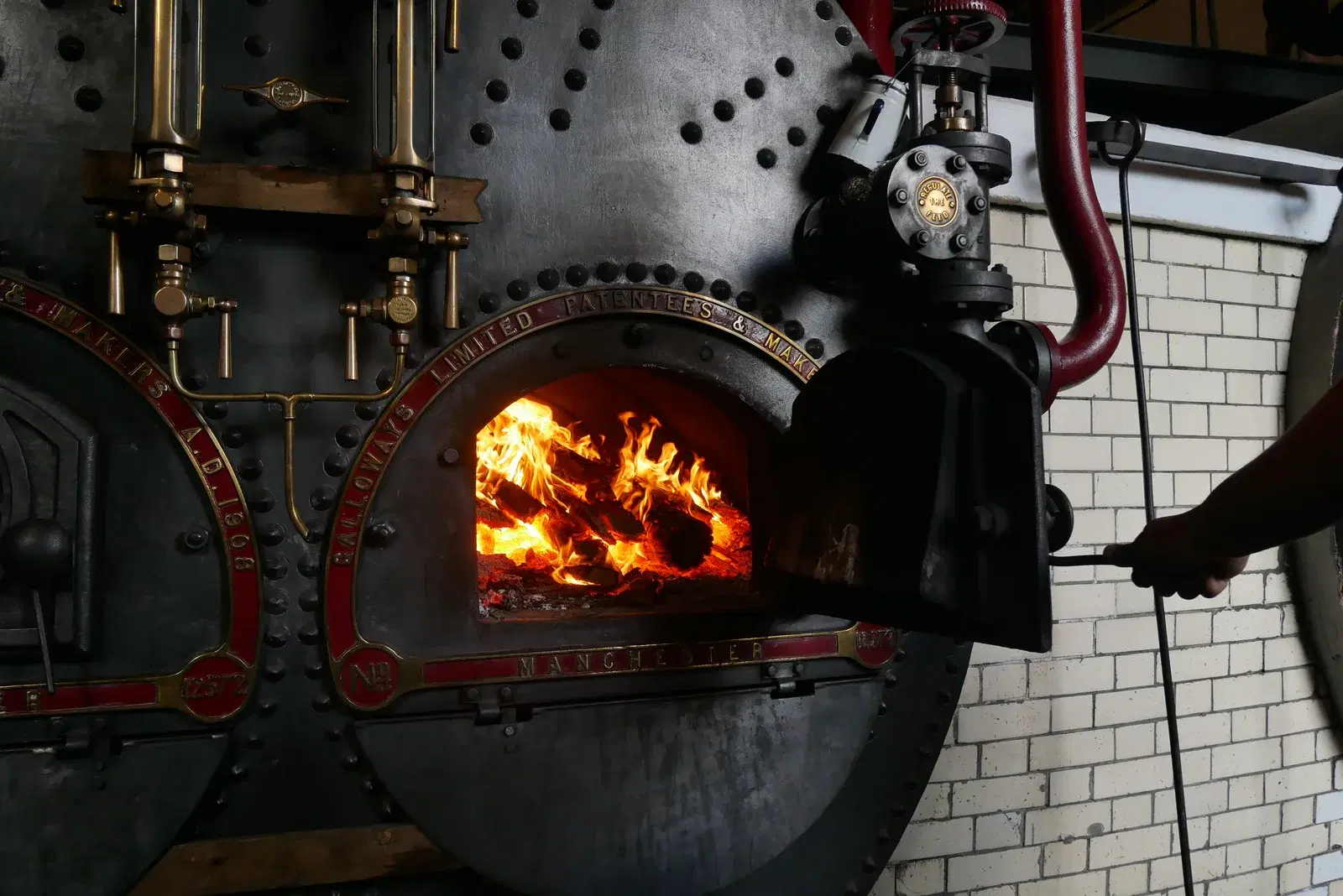
Industry and a growing town needed clean water. Ryhope Engines Museum is a Victorian pumping station built in the 1860s that supplied Sunderland until 1967. Its two beam engines, built by R & W Hawthorn, are kept in working order by the volunteer trust formed in 1973, and are put into steam on some weekends and bank holidays. The building, with its Dutch gables and chimney of nearly 160 feet, is Grade II* listed.
Best for: Suits families and anyone interested in engineering; check the open days before travelling.
Brewing
Vaux Breweries was founded in the town centre in the 1880s and was a major employer for over a century until it closed in July 1999. The brewery site has since been redeveloped, and the city's new City Hall opened there in 2021.
Researching the trades
The Sunderland Antiquarian Society holds an archive of maps, newspapers, census returns and other records at its Douro Terrace heritage centre, open to the public on set mornings, and is a good place to start if your family worked on the river. The heritage hub lists our other history guides, including interesting facts about Sunderland.
Know a place we have missed? Get in touch.
Local businesses mentioned
Ryhope Engines Museum
Waterworks Road, Ryhope, Sunderland, SR2 0ND
Sunderland AFC (Stadium of Light)
Stadium of Light, Millennium Way, Monkwearmouth, Sunderland, SR5 1SU
Keel Tavern
Unit 2, Holiday Inn, Keel Square, Sunderland, SR1 3DS
Penshaw Monument
Chester Road, Penshaw, Sunderland, DH4 7NJ
Sunderland Antiquarian Society Heritage Centre
6 Douro Terrace, Sunderland, SR2 7DX
Never miss what’s on
Join the weekly SunderlandCity.live digest — the best events, news and local tips, straight to your inbox. One email a week.
What's On
Witches, Fairies and Satan: Folk Tales of County Durham
1:00 PM · Arts Centre Washington, Biddick Lane, Fatfield, Washington, NE38 8AB
Frozen Assets
7:30 PM · Arts Centre Washington, Biddick Lane, Fatfield, Washington, NE38 8AB
Spotlight: Washington Open Exhibition 2026
See website · Arts Centre Washington, Biddick Lane, Fatfield, Washington, NE38 8AB