Nissan Sunderland: 40 Years of the Car Plant on the Old Airfield
The story of Nissan's Sunderland plant, from the 1984 agreement and the first Bluebird in 1986 to the Qashqai, Juke and LEAF built there today and the EV36Zero battery and renewables hub.
When the last shipyards and pits closed in the 1980s and early 1990s, one large employer was moving in the other direction. Nissan's car plant, between Sunderland and Washington, has been building cars since 1986, and in 2026 it marks its 40th anniversary. Our history of Sunderland and historic trades guides cover the older industries; this guide tells the story of the factory that followed them, and what it means to Sunderland and Washington today.
Choosing Sunderland
Nissan signed the agreement in February 1984 to build a car factory in the UK. The following month it chose a 799-acre site on the former Sunderland Airfield, once RAF Usworth, between Sunderland and Washington.
The first cars
The first phase of the plant was completed in July 1986, and the first car to roll off the line was the Nissan Bluebird. The factory was officially opened in September 1986 by the Prime Minister, Margaret Thatcher, together with Nissan's president, Yutaka Kume.
In the four decades since, the plant has built ten different models. After the Bluebird came the Primera, Micra, Almera and Note, the Infiniti Q30 for Nissan's premium brand, and then the three cars most closely linked with Sunderland today: the Juke, the Qashqai and the LEAF. According to Nissan, the plant has now built more than 12 million vehicles. Spread over 40 years, that works out at an average of around 300,000 cars a year, every one of them built on the same stretch of former airfield.
What it builds today
In September 2026, Nissan said that the Sunderland plant builds the Qashqai, the Juke and the LEAF. It also announced that the Kicks will become the tenth model built at Sunderland since 1986, backed by an investment of £170 million. An all-new, fully electric third-generation Juke is due from 2027.
Output has risen and fallen with the wider car market. The plant's highest annual production was 519,000 vehicles in 2017. In 2025 it built about 273,000, against a capacity of around 600,000. In May 2026 it was reported that Nissan planned to consolidate production at Sunderland from two lines onto one, without job losses at the factory.
Electric cars and EV36Zero
Sunderland has built electric cars for Nissan since the first-generation LEAF. A £420 million battery plant to support it was announced in 2010.
The current phase is called EV36Zero, a £1 billion partnership between Nissan, its battery partner Envision AESC and Sunderland City Council. It brings together three things on one site: electric vehicle manufacturing, battery production and renewable energy. Construction of a new AESC gigafactory began in December 2022, just across the road from the car plant, and it now supplies batteries for the LEAF. The LEAF and the coming electric Juke share the plant's Line Two.
Production of the third-generation LEAF began in December 2025 as the first car of the EV36Zero plan. Nissan invested £450 million in preparing for it, including 137 new press dies, 78 robots and 475 automated guided vehicles that move parts around the factory floor.
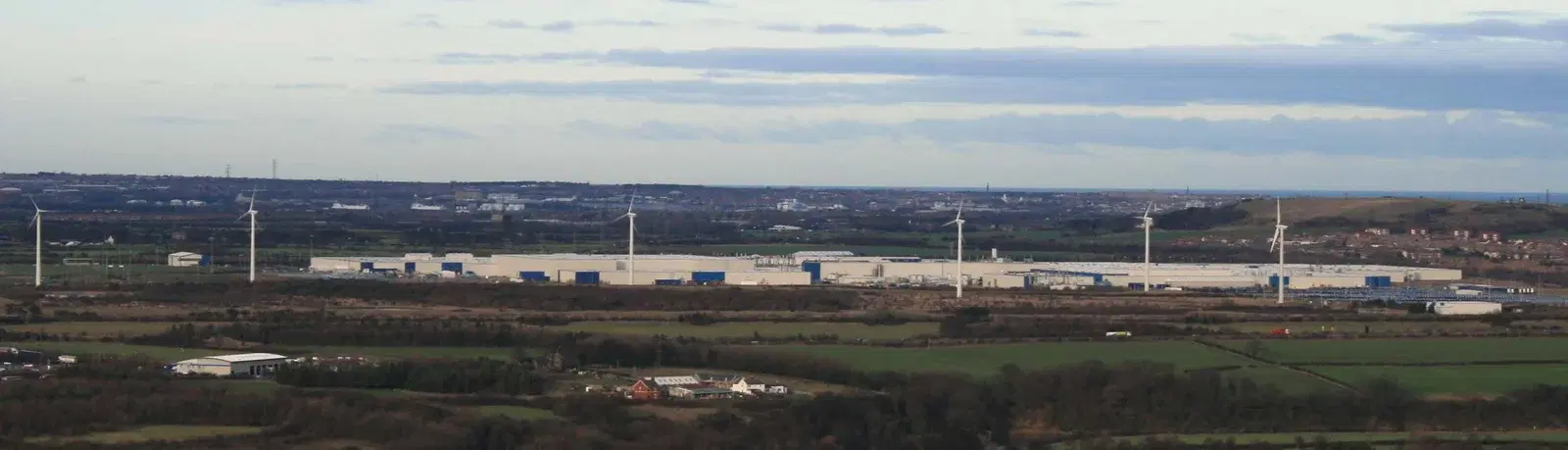
Energy is part of the plan too. Ten wind turbines on the site can supply up to a tenth of the plant's power, and renewable energy is one of the three strands of EV36Zero.
Nissan Sunderland timeline
- February 1984: agreement signed to build a Nissan factory in the UK
- March 1984: the former Sunderland Airfield chosen as the site
- July 1986: first phase complete, and the first Bluebird built
- September 1986: official opening by Margaret Thatcher and Yutaka Kume
- 2010: £420 million battery plant announced
- 2017: record production of 519,000 vehicles
- December 2022: construction begins on the AESC gigafactory
- December 2025: third-generation LEAF production begins
- 2026: 40th anniversary, and the Kicks announced as the tenth Sunderland model
- 2027: all-new electric Juke due
Why it matters
The photograph at the top of this page shows the scale of the site: the long run of assembly halls stretches across the skyline, with the wind turbines standing in front of them.
Nissan says the plant employs about 6,000 people directly, with around 30,000 more jobs in its supply chain across the UK. That makes it a major workplace for the city, and changes in production at Sunderland are followed closely by local people, businesses and politicians alike. Sunderland City Council is a partner in the EV36Zero scheme, a sign of how closely the city's plans for jobs and investment are tied to the plant.
The plant opened in the decade when Sunderland lost most of its shipyards and pits. Forty years on, a city long associated with ships and coal also makes cars that are sold around the world, and its next chapter is tied to electric vehicles and batteries.
Visiting
The plant is a working factory, and Nissan does not advertise public tours. The best way to see it is from the outside: its long white buildings and wind turbines are clearly visible from the A19.
Best for: The North East Land, Sea and Air Museums, a volunteer-run museum on Old Washington Road close to the plant, make a good stop if you want to explore the area's history of flight and transport.
In Washington itself, Washington Old Hall and the WWT Washington Wetland Centre are both within a short drive. For more ideas, see our guide to things to do in Sunderland, or our moving to Sunderland guide if work at the plant or its suppliers is bringing you to the area.
Know a place we have missed? Get in touch.
Never miss what’s on
Join the weekly SunderlandCity.live digest — the best events, news and local tips, straight to your inbox. One email a week.
What's On
Witches, Fairies and Satan: Folk Tales of County Durham
1:00 PM · Arts Centre Washington, Biddick Lane, Fatfield, Washington, NE38 8AB
Frozen Assets
7:30 PM · Arts Centre Washington, Biddick Lane, Fatfield, Washington, NE38 8AB
Spotlight: Washington Open Exhibition 2026
See website · Arts Centre Washington, Biddick Lane, Fatfield, Washington, NE38 8AB